

First shared on LinkedInView the original post
Most senior construction job ads are written the same way: a title, a list of duties and “competitive salary”. Then firms wonder why the people they want never apply. Here are four mistakes we see again and again, and what to write instead.
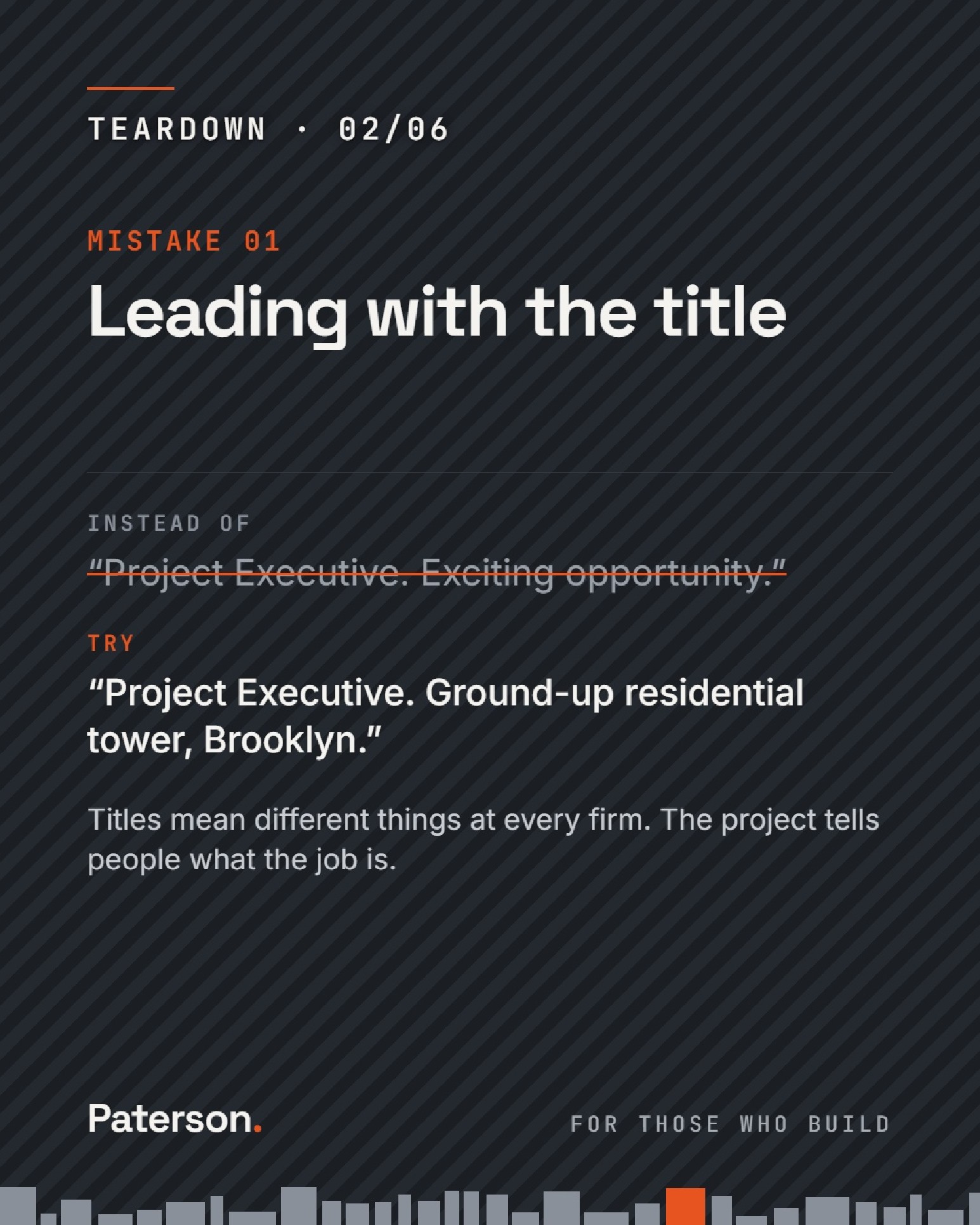
1. Leading with the title instead of the project. Instead of “Project Executive. Exciting opportunity.”, try “Project Executive. Ground-up residential tower, Brooklyn.” Titles mean different things at every firm. The project tells people what the job is.
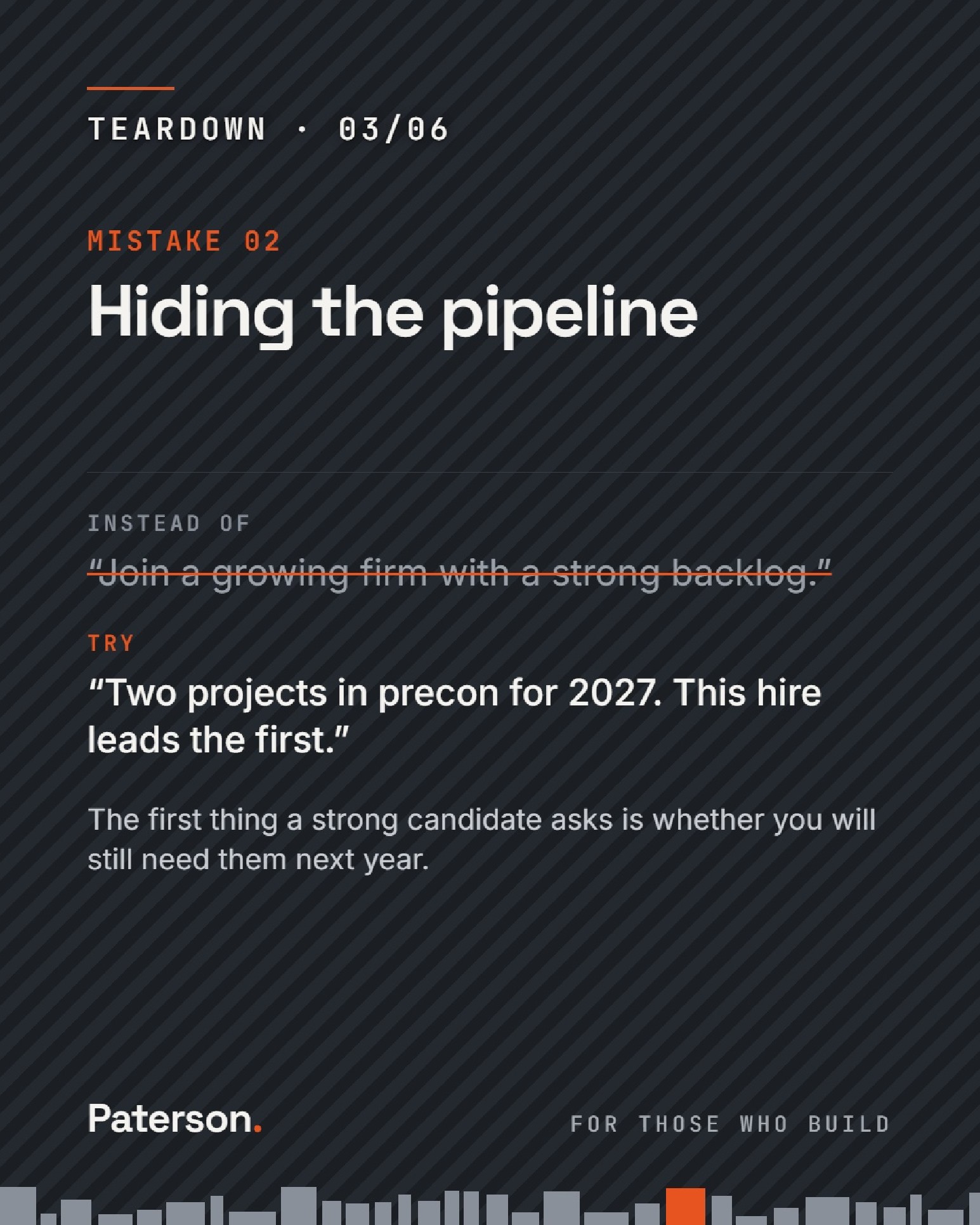
2. Hiding the pipeline. Instead of “Join a growing firm with a strong backlog.”, try “Two projects in precon for 2027. This hire leads the first.” The first thing a strong candidate asks is whether you will still need them next year.
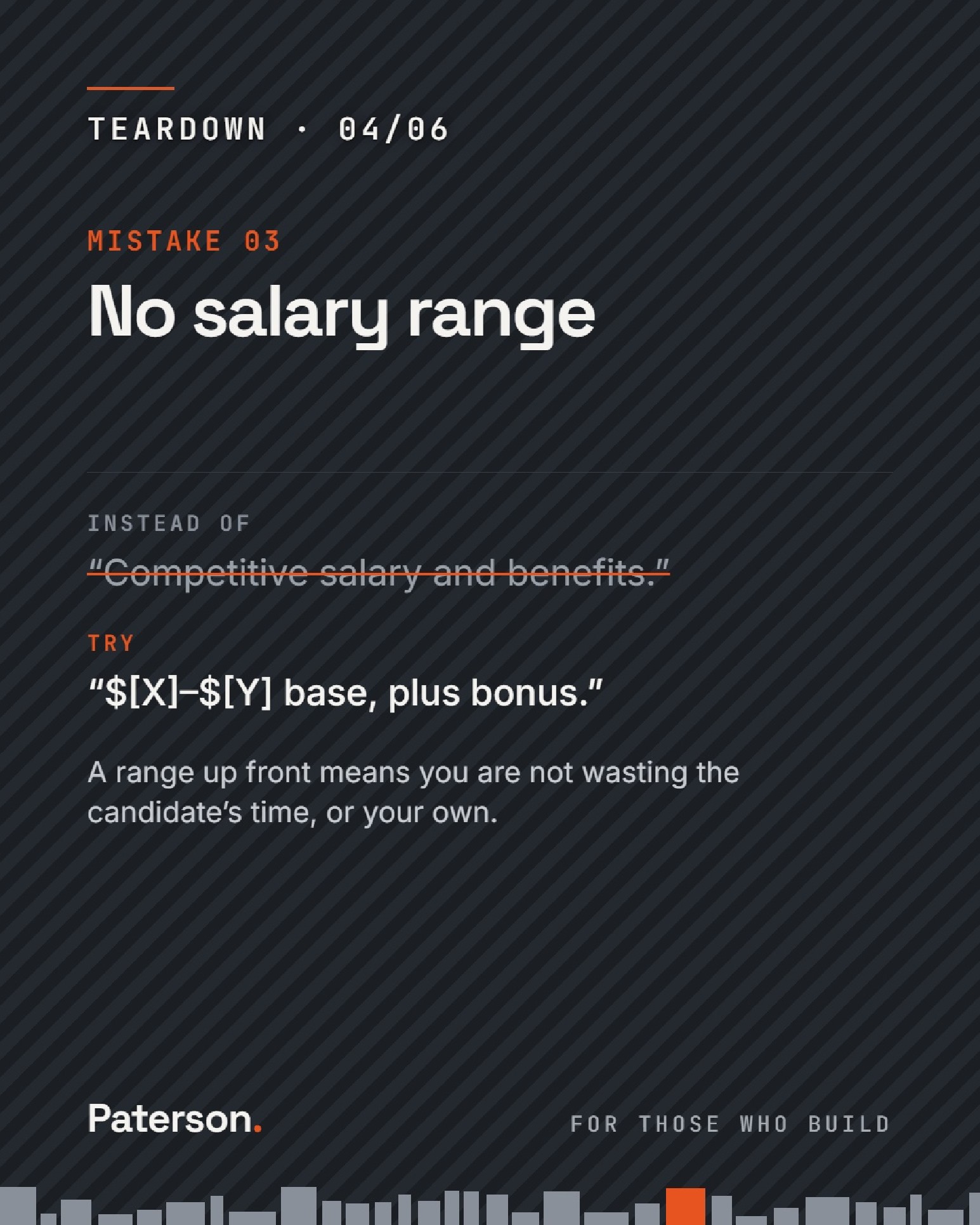
3. No salary range. Instead of “Competitive salary and benefits.”, try “$[X]–$[Y] base, plus bonus.” A range up front means you are not wasting the candidate's time, or your own.
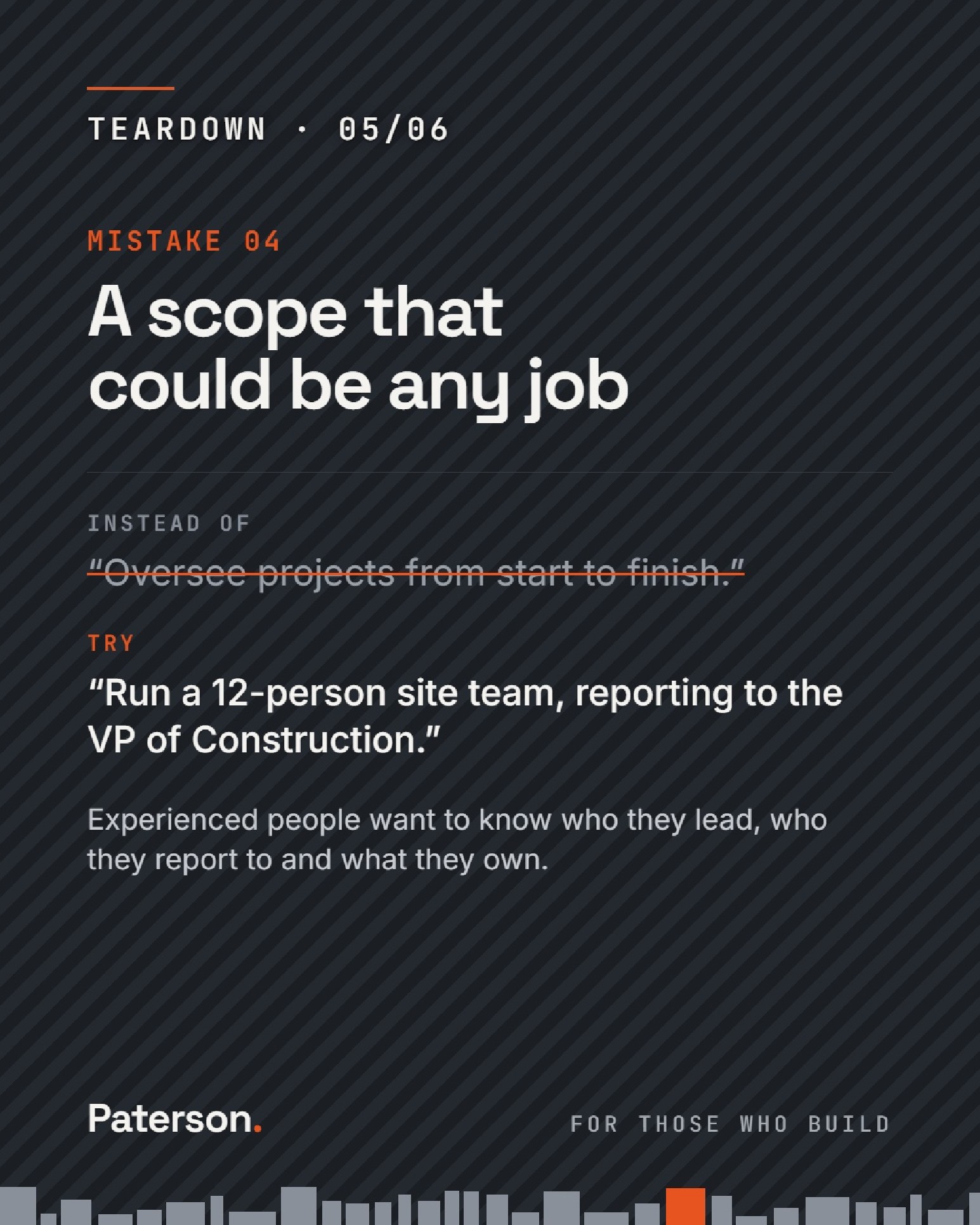
4. A scope that could describe any job. Instead of “Oversee projects from start to finish.”, try “Run a 12-person site team, reporting to the VP of Construction.” Experienced people want to know who they lead, who they report to and what they own.
What It Means for Hiring
None of these fixes cost anything. They just require saying what the job actually is.
What makes you scroll past a job ad, or stop and read it? We would like to hear from you.
More From Market Watch

Hiring Insight: Pipeline Is the First Question
Senior construction professionals have always asked about a firm's pipeline before a move. Paterson now hears it from Assistant Project Managers too: what is the backlog, and will this firm still need me in two years?

Spotlight: Tishman, Now AECOM Tishman
Founded in 1898, Tishman developed and popularised construction management, built the original World Trade Center and returned to rebuild the site after 9/11. It is now part of AECOM.

Behind the Build: The Flatiron Building, 175 Fifth Avenue
The Flatiron Building at 175 Fifth Avenue has opened to residents for the first time in its 124-year history, converted from landmark offices into 36 condominiums.